1 Missing GFCI Protection in Required Locations
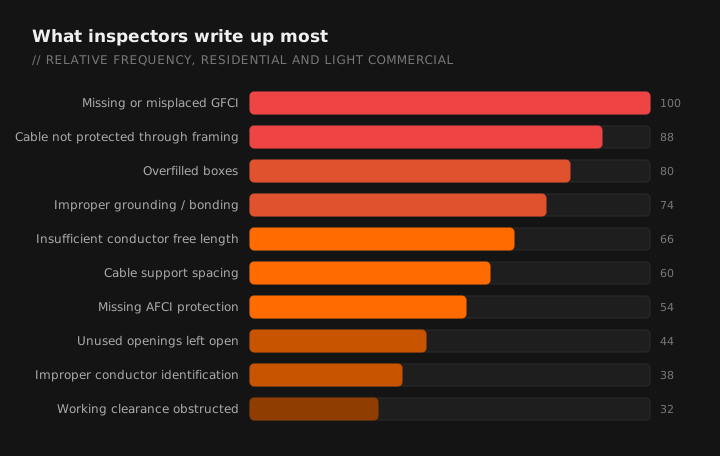
This is the single most common violation on residential inspections. The NEC requires GFCI protection in bathrooms, kitchens (countertop receptacles), garages, outdoors, unfinished basements, crawl spaces, laundry areas, and within 6 feet of sinks. The 2023 NEC expanded this further to include 250V circuits in many of these locations.
How to avoid it: Know the GFCI location requirements for your adopted code edition. When in doubt, add GFCI protection — it's cheaper than a callback.
2 Overcrowded Electrical Boxes (Box Fill Violations)
Stuffing too many conductors, devices, and clamps into a box is extremely common, especially in remodel work. Each conductor, device, and fitting takes up a specific volume in cubic inches, and the box must be large enough to contain everything per NEC Article 314.16.
How to avoid it: Count every conductor, clamp, device yoke, and grounding conductor. Use a box fill calculator to verify before you close it up.
3 Improper or Missing Bonding
Bonding jumpers get missed or installed incorrectly more than most electricians want to admit. Common issues include missing bonding at water heaters, metal piping systems, gas lines, and between the grounding electrode system and the service equipment. Loose or undersized bonding jumpers are also flagged frequently.
Photograph a rough-in and SparkCheck flags likely issues with severity and a suggested fix.

How to avoid it: Treat bonding as its own checklist item on every job. Verify the bonding jumper size using NEC Table 250.66 or 250.122 depending on the application.
4 Missing or Incorrect Arc-Fault Protection (AFCI)
AFCI protection is required in most living areas of dwelling units — bedrooms, living rooms, dining rooms, kitchens, hallways, closets, and similar rooms. Electricians sometimes miss required locations or install standard breakers instead of combination AFCI breakers.
How to avoid it: Default to AFCI breakers for every 15A and 20A, 120V branch circuit in dwelling unit living areas. It's easier to protect everything than to figure out exceptions.
5 Exposed or Unprotected Romex (NM Cable)
NM cable must be protected from physical damage. Running Romex exposed across garage walls below 8 feet, through areas subject to physical damage, or without proper stapling and support are all common violations.
How to avoid it: Protect NM cable with conduit or guard strips in areas subject to damage. Support NM cable within 12 inches of every box and at intervals not exceeding 4.5 feet.
6 Wrong Wire Size for the Circuit
Using 14 AWG on a 20A circuit, undersizing feeders, or failing to derate conductors when there are too many in a raceway — conductor sizing errors can be both a code violation and a safety hazard. This is especially common when homeowners or handymen do their own work.
How to avoid it: Always verify ampacity from NEC Table 310.16 and apply derating factors per 310.15 when required. Match the conductor to the breaker, not the other way around.
7 Missing Tamper-Resistant Receptacles
Since the 2008 NEC, tamper-resistant receptacles have been required in dwelling units. This is one of the easiest violations to catch — and one of the easiest to avoid — yet it still shows up on inspections, particularly on DIY or handyman work and sometimes on new construction where standard receptacles get mixed in.
How to avoid it: Use TR-rated receptacles exclusively in dwelling units. They cost pennies more than standard receptacles.
8 Improper Grounding Electrode System
Missing ground rods, disconnected water pipe bonds, or improperly connected grounding electrode conductors are common, especially in older home rewires and service upgrades. The grounding electrode system requires all present electrodes to be bonded together.
How to avoid it: Bond all available electrodes: metal water pipe (within 5 feet of entry), ground rods, concrete-encased electrode (Ufer ground), and building steel if present. Use the correct GEC size from NEC Table 250.66.
9 Missing Working Space Clearances
NEC 110.26 requires specific working space clearances in front of electrical equipment — typically 36 inches deep, 30 inches wide, and clear to the ceiling or 6.5 feet high. Panels installed in tight closets, behind stored items, or in locations that don't meet depth requirements get flagged regularly.
How to avoid it: Measure the working space before you mount the panel. Communicate clearance requirements to the GC and homeowner so they don't stack stuff in front of it later.
10 Missing or Incorrect Circuit Directory
Every panelboard must have a legible circuit directory that identifies the purpose or use of each circuit. Handwritten, faded, or incorrect directories are a violation and a safety hazard for anyone working on the panel later — including you on a callback.
How to avoid it: Print a clean, typed circuit directory for every panel you install or work on. Take the extra 10 minutes — it's professional and it's required.
The Bottom Line
Every one of these violations is avoidable with attention to detail and knowledge of the code. Most of them come down to rushing, cutting corners, or simply not checking. Build a personal inspection checklist that covers these 10 items and run through it before you call for inspection. It'll save you callbacks, failed inspections, and headaches.
SparkCheck analyzes photos of your installations and flags potential code issues before inspection day.
GET THE FIELD PACK
Two printables: the 22-point rough-in checklist, and branded panel schedules in 24, 30 and 42 circuit that print at 4 by 5 inches and slide straight into a panel sleeve. Enter your email and the downloads open right away.
You're set. Both are below.
Your address comes straight to Jason. No list rental, no spam, unsubscribe any time.